Call Us Today  210-201-3832

-

- Home
- Our Firm
- Practice Areas
- Divorce
- The Divorce Process
- Contested Divorce
- Uncontested Divorce
- Spousal Support
- Community Property vs. Separate Property
- High Net Worth Divorce
- Complex Property Division
- Bankruptcy & Divorce
- Military Divorce
- Breached Settlement Agreements
- Divorce for Doctors
- Divorce for Lawyers
- Divorce for Professional Athletes
- Senior Divorce
- Adultery & Divorce
- Abandonment & Divorce
- How Death Impacts Divorce Actions
- Domestic Violence & Divorce
- Family Law
- Child Custody
- Child Support
- Divorce
- Media
- Testimonials
- Scholarship
- Blog
- Contact
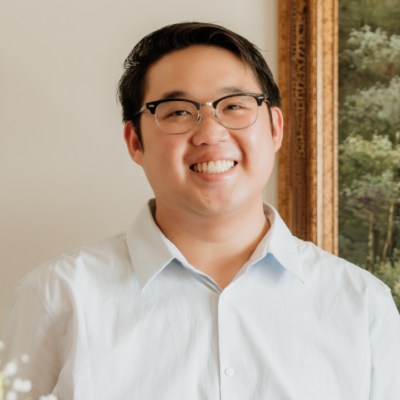
Spring 2026 Winner of the Difference Makers Scholarship
Austin Tang
Austin has been involved with several volunteer and service efforts, with each one shaping his passion for the healthcare industry. He is eager to share this same dedication to service with the next generation of nurses. We congratulate him on this achievement and are excited to see the impacts of his work!
Read Their Essay Here:
One of the most meaningful memories I have of making a difference in my community began at the SLCC Thayne Center when I first volunteered at the Bruin Pantry. I remember helping a student who had quietly walked in near closing time, embarrassed to ask for food. We talked as I packed a bag of groceries, and she told me she hadn’t eaten all day because her paycheck went toward rent. That moment changed how I viewed community service—not as charity, but as a bridge that restores dignity, equity, and hope. As a Civically Engaged Scholar, I learned that addressing basic needs is foundational to helping people thrive academically, socially, and emotionally. It was also one of the first experiences that inspired me to pursue nursing, where service and compassion meet every day.
Through my involvement with the Thayne Center, I have worked on multiple community projects that connect public health with civic leadership. Whether coordinating volunteers for food distribution events or creating outreach materials for students facing food insecurity, I have learned that small, consistent acts of service can lead to lasting systems of support. These experiences shaped my understanding of health as not just the absence of disease, but the presence of stability, connection, and access to resources.
Another favorite memory was volunteering at the Utah Asian Festival as part of the Entertainment Committee. It was a day filled with music, art, and cultural pride, but also with purpose. I helped organize performers, guide guests, and support community organizations that provided health screenings and resources for immigrant families. Seeing generations come together—elders teaching traditional crafts, children dancing on stage—reminded me that cultural service strengthens identity and unity. That moment deepened my appreciation for representation and cultural humility, lessons I carry into nursing when caring for diverse patients.
In my public-health coursework and nursing clinicals, I have found ways to blend academic learning with community impact. During a recent community health assessment project, I conducted a windshield survey in West Jordan, identifying areas where access to fresh food and healthcare was limited. This project led me to collaborate with local organizations on health-education materials about hypertension prevention and nutrition. The experience taught me how data and compassion intersect—how evidence-based practice can guide service that directly improves lives. It also reinforced my belief that nursing is not only about bedside care, but also about advocacy, education, and prevention.
Looking ahead, the positive changes I hope to make in my community focus on preventive health, equitable access, and culturally competent care. As I continue my nursing education and transition into a BSN program, I plan to expand on my work in community and public health nursing by developing programs that promote health literacy and chronic disease prevention. I am especially interested in nursing informatics and how data can be used to design more efficient outreach efforts—such as tracking local food insecurity rates, mapping vaccination access, and tailoring health resources for multilingual communities. My goal is to combine the compassion of nursing with the precision of informatics to help bridge gaps between healthcare systems and underserved populations.
In the near future, I also hope to mentor younger students through SLCC’s peer leadership programs, helping them see service as a pathway to personal and professional growth. By encouraging students to engage in civic projects—whether that means tutoring peers, organizing campus food drives, or volunteering at health fairs—we create a culture of empathy and responsibility. I believe that empowering the next generation of students to serve is one of the most sustainable ways to strengthen a community.
This type of service is deeply important to me because it embodies the core values of connection, compassion, and continuity. Community service is not just about giving time—it is about building trust, creating opportunity, and reminding people that they are not alone. Every act of service, no matter how small, contributes to the collective resilience of our community. From comforting a nervous patient in clinicals to helping a student access food, these experiences reaffirm why I chose healthcare: to care, to listen, and to make a difference one person at a time.
Ultimately, the best memory I have of making a difference is not a single event, but a reflection of many interconnected experiences that have shaped who I am—a nursing student, a peer leader, a volunteer, and a lifelong learner. Each moment, whether serving through the Thayne Center, the Utah Asian Festival, or my public-health projects, has taught me that community service is not about recognition; it’s about responsibility. The positive changes I hope to bring—health equity, education, and empowerment—are built on that foundation of service and empathy.
In nursing and in life, I have learned that healing begins with listening and that community change begins with small, compassionate actions. Service reminds us that we are all connected, and through that connection, we find purpose. My hope is to continue turning those moments of service into a lifelong commitment to improving the health and well-being of my community, one act of kindness at a time.

From our office in San Antonio, we provide legal help to clients throughout Central Texas, including Converse, Seguin, Selma, Windcrest, Schertz, Live Oak, New Braunfels, Alamo Heights, Balcones Heights, Castle Hills, Hollywood Park, Shavano Park, Leon Valley, Helotes, Boerne, Bexar County, Comal County, Kendall County, Guadalupe County and Medina County.
Results listed are not a guarantee or indication of future case results.
315 Dwyer Ave, San Antonio, TX 78204
210-201-3832
Contact Our Firm
 The use of the Internet or this form for communication with the firm or any individual member of the firm does not establish an attorney-client relationship. Confidential or time-sensitive information should not be sent through this form.
I have read and understand the Disclaimer and Privacy Policy.